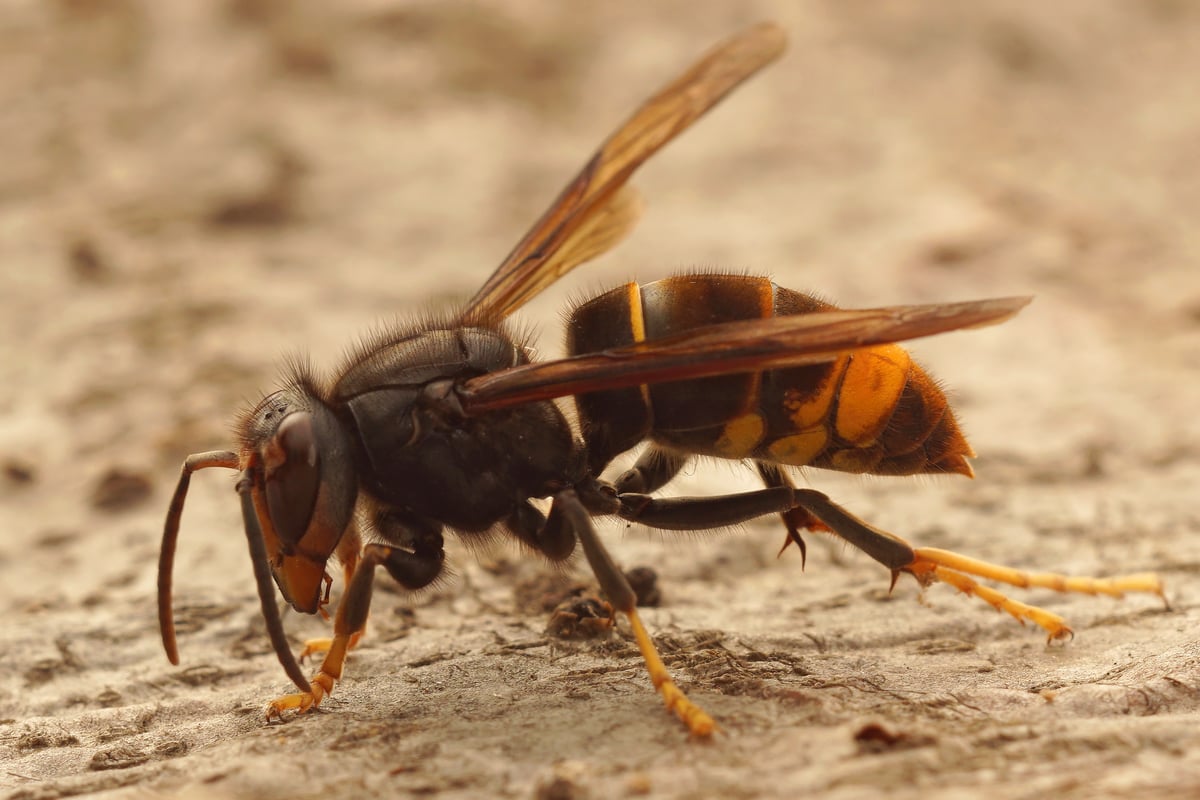
Yellow-Legged Hornets This Autumn
Seeing an unfamiliar hornet or large wasp can be worrying, particularly when yellow-legged hornets are increasingly being discussed in the UK.
The yellow-legged hornet, also known as the Asian hornet, is an invasive non-native species that preys on honeybees and other insects. It is not currently considered established in the UK, but confirmed sightings and nests have been recorded, which is why accurate identification and prompt reporting remain important.
If you think you have seen one, do not approach or disturb a nest. Instead, look from a safe distance, take a photograph if you can do so safely, and report the sighting through the official Asian Hornet Watch system.
The Quickest Way To Recognise A Yellow-Legged Hornet
A yellow-legged hornet is generally darker than both a common wasp and the native European hornet.
The main features to look for are:
- A predominantly dark brown or black body
- A single obvious yellow-orange band towards the rear of the abdomen
- Brown legs with distinctive yellow ends
- A dark head when viewed from above, with an orange face
- A body that is smaller and darker overall than a European hornet
Workers can reach around 25 mm in length, while queens can be larger. Official identification guidance stresses that the dark body and yellow-tipped legs are among the most useful features to check.
Yellow-Legged Hornet, European Hornet Or Wasp?
It is easy to confuse these insects, especially when they are flying.
Insect | Typical Appearance | Useful Identification Clue |
Yellow-legged hornet | Mostly dark body with one broad orange-yellow abdominal band | Yellow ends to the legs |
European hornet | More yellow across the abdomen with reddish-brown markings | Larger and much more yellow overall |
Common wasp | Bright yellow and black striped abdomen | Smaller, with repeated yellow and black bands |
Honey bee | Brown or golden, often appearing hairy | Less sharply striped and noticeably hairy |
One of the most common mistakes is assuming that any unusually large wasp-like insect must be a yellow-legged hornet.
In reality, many suspected reports turn out to be native European hornets, hoverflies or other insects. UKCEH has previously reported that the majority of public submissions are not confirmed yellow-legged hornets.
Is An Asian Hornet The Same As A Yellow-Legged Hornet?
Yes. In UK guidance, "yellow-legged hornet" and "Asian hornet" refer to the same species, Vespa velutina.
The term yellow-legged hornet is increasingly used because it describes one of the insect's most recognisable features and helps distinguish it from other species sometimes called Asian hornets.
It should not be confused with the much larger Asian or northern giant hornet.
Why Are Yellow-Legged Hornets Being Discussed This Autumn?
The issue remains current within professional pest management and conservation.
In September 2026, the British Pest Control Association highlighted yellow-legged hornets during discussions about the role professional pest management can play in dealing with invasive species.
Autumn is also not too late to remain observant. Government records for 2025 included confirmed nests during October and November. In total, 161 confirmed nests were recorded during 2025, all of which were destroyed.
The concern is primarily environmental rather than a new or exceptional danger to people. Yellow-legged hornets prey heavily on insects, including honeybees and other pollinators. Official guidance states that they pose no greater general risk to human health than native wasps and hornets.
What Should You Do If You Think You Have Seen One?
If you spot an insect that matches the description, there are a few sensible steps to follow.
Keep Your Distance
Do not attempt to approach, touch or disturb a suspected nest. Like other social wasps and hornets, they may defend the nest if they feel threatened.
Take A Photograph If It Is Safe
A clear photograph can help specialists confirm the species. Try to photograph the insect without moving closer or putting yourself at risk.
Report The Sighting
Suspected yellow-legged hornet sightings should be reported through the official Asian Hornet Watch system operated by the UK Centre for Ecology & Hydrology.
Reports can be submitted using the Asian Hornet Watch app or the official online recording system. Photographs and an accurate location are particularly useful.
Do Not Try To Destroy A Suspected Nest Yourself
A suspected yellow-legged hornet nest should be reported rather than tackled as a DIY pest-control job.
Official reporting allows the sighting to be assessed and, where necessary, enables the appropriate authorities to respond.
What If It Turns Out To Be A Normal Wasp Or European Hornet?
That is very common.
Native hornets are an important part of UK wildlife, while bees should not automatically be treated as pests simply because they are nesting near a property.
If the insect is confirmed as an ordinary wasp or native hornet and the nest is creating a genuine risk around your home or workplace, professional advice may be appropriate. Our guide to wasp and hornet removal explains more about dealing with these situations safely.
If the insects are bees, the approach is different. Where appropriate, we look at responsible options rather than simply treating them as a pest. You can read more about our bee removal and relocation approach.
Common Questions About Yellow-Legged Hornets
Q: Are Yellow-Legged Hornets Established In The UK?
Current official guidance says they are not established in the UK. Monitoring, public reporting and nest destruction have so far helped prevent a permanent population from becoming established.
Q: Are Yellow-Legged Hornets More Dangerous Than Normal Wasps?
Official guidance states that they do not pose a greater general health risk than native wasps or hornets. The main concern is their impact on honeybees and other pollinating insects.
Q: Where Do Yellow-Legged Hornets Build Nests?
Nests can occur in trees and man-made structures, sometimes high above ground and sometimes much lower. This is another reason not to approach a suspected nest to try to identify it yourself.
Q: Should I Report A Sighting Even If I Am Not Certain?
Yes. The reporting system is designed to assess suspected sightings. A good photograph and precise location can help experts determine whether the insect is genuinely a yellow-legged hornet.
Seen A Wasp Or Hornet And Still Not Sure What It Is?
The safest approach is identification before treatment.
If you believe you have seen a yellow-legged hornet, use the official Asian Hornet Watch reporting system first.
If you are instead dealing with an established wasp, native hornet or bee issue around a property in our service area, we can help assess what is present and explain the appropriate next step.